Botanical Line Art Graphics & Illustrations
As someone who’s launched over 200 digital product listings across Etsy, Creative Market, and Shopify — mostly printables, Canva templates, and sublimation bundles — I opened Botanical Line Art, Minimalistic Clip Art expecting clean utility. What I found was a quietly versatile set of graphic design assets that work harder than most floral clipart packs claim to.
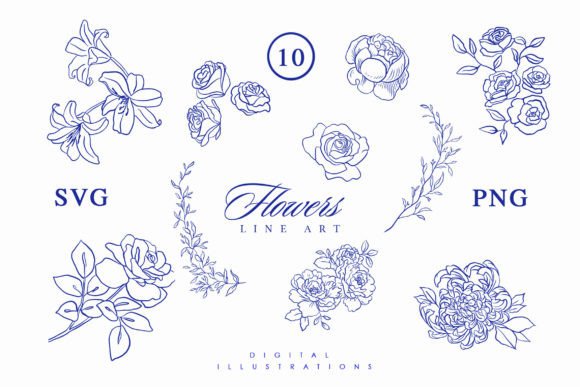
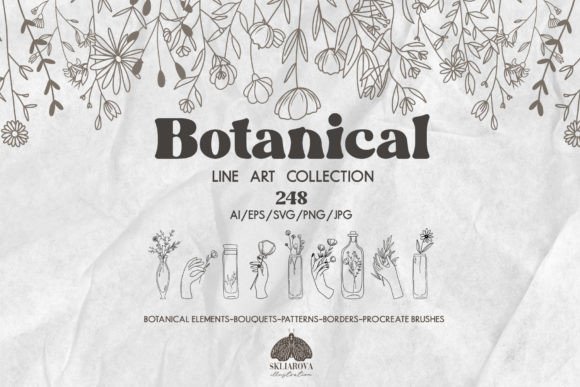
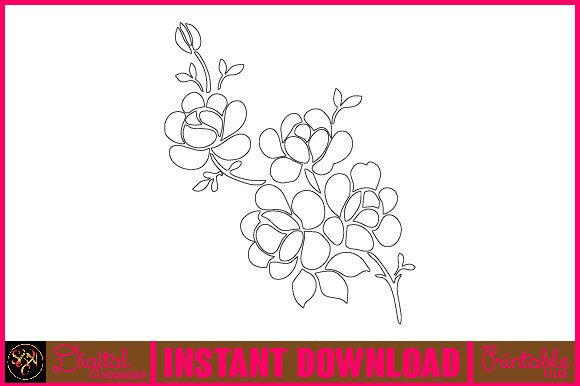
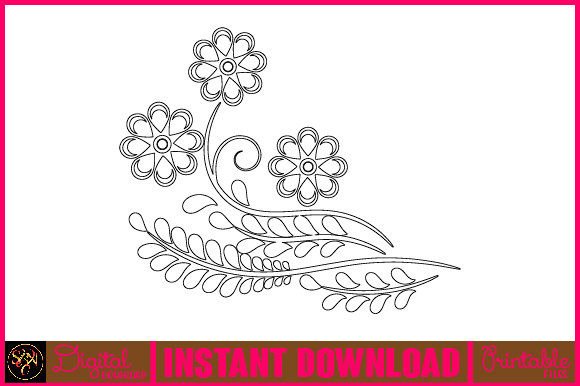
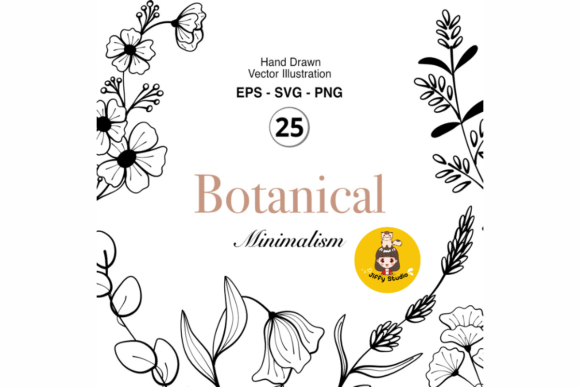
The first impression is calm confidence: thin, intentional strokes; balanced negative space; no visual noise. These aren’t fussy illustrations. They’re Botanical Line Art, Minimalistic Line Flowers designed for clarity — not decoration for its own sake. The mood leans modern, serene, and quietly sophisticated. Think small business branding for wellness studios, minimalist stationery brands, or neutral-toned nursery collections — not boho festivals or maximalist greeting cards. It attracts buyers who value restraint, consistency, and quiet elegance.
This set shines where commercial clarity matters most. As a digital product creator, I tested it across six real product categories before finalizing my Etsy launch:
- SVG designs for Cricut and Silhouette users — all paths are smooth, closed, and properly layered. No stray anchor points or overlapping strokes. Ideal for sticker sheets, iron-on transfers, and vinyl decals.
- PNG designs with crisp transparency — perfect for printable wall art, planner stickers, and social media graphics. Tested on matte paper and glossy sticker stock: no haloing or edge fringing.
- Floral Line Art SVG files scaled cleanly from 2" to 24" without distortion — critical for mug wraps, tumbler decals, and tote bag prints.
- Sublimation designs that hold detail at 300 DPI. Paired well with soft white and heather grey blanks — no muddy gradients or lost linework.
- Canva templates (invitation suites, blog banners, newsletter headers) — the simplicity lets typography take center stage while adding subtle botanical rhythm.
- Digital download bundles — grouped by stem type (eucalyptus, fern, lavender, olive branch) and orientation (vertical, horizontal, corner accents). Easy to organize and label for customers.
What surprised me most was how well Botanical Line Art, Minimalistic Clip Art supports product presentation. In marketplace thumbnails — especially on Etsy — minimal line art reads instantly, even at 200px width. It creates strong visual hierarchy against clean mockups, boosting click-through potential. I used one stem motif as a consistent watermark across my entire seasonal collection, reinforcing brand identity without overwhelming the layout.
It also elevates perceived value in printable design listings. A single floral frame around a quote page feels intentional, not generic. When bundled with serif fonts for headings and delicate sans serifs for body text, the result reads premium — not clipart-y. That trust translates directly to conversion rates, especially for handmade business owners building credibility.
Where does it work best? In large product previews, themed bundles (spring cleaning kits, wedding planning packs), decorative layouts for digital planners, and merchandise graphics where subtlety reads as sophistication. It’s ideal for social media graphics — Instagram story highlights, Pinterest pins, and email headers — because it doesn’t compete with copy. And yes, it holds up beautifully in product mockups: ceramic mugs, linen tea towels, kraft paper tags, and matte poster frames.
But here’s where caution matters. Avoid using the finest stems (like single-line jasmine vines) for tiny sticker sheets under 0.75". At that scale, details blur. Don’t force it into overly complex layouts — this isn’t a busy background pattern. Skip dark backgrounds unless you invert or add a subtle drop shadow; the thin lines disappear on black or navy without contrast testing. And never assume cut quality: always run a test cut on your Cricut machine — especially if layering multiple stems for layered vinyl projects.
My practical seller checklist before publishing:
- Preview the Floral Line Art PNG on both white and charcoal mockups — check edge sharpness and contrast.
- Test print one design on your target paper stock — verify line weight holds at actual size.
- Open each Floral Line Art SVG in Design Space — confirm all layers unlock cleanly and stroke order matches intended cut sequence.
- Zoom to 400% in Illustrator — look for stray points, ungrouped elements, or inconsistent stroke widths.
- Verify the ZIP archive includes clearly named folders: “SVG”, “PNG-300DPI”, “PNG-Transparent”, “Bonus-Layouts” — messy file structure hurts customer trust.
- Pair one stem with five font types: serif (Playfair Display), sans serif (Inter), script (Dancing Script), handwritten (Caveat), display (Bebas Neue). See which combo feels most aligned with your brand voice.
- Re-read the commercial license — confirm you can sell finished products (t-shirts, mugs, digital templates) without attribution or royalties.
Bottom line: Botanical Line Art, Minimalistic Clip Art isn’t flashy — and that’s its strength. It’s a reliable, scalable illustration asset built for real-world selling. It supports small business branding without demanding attention. It fits seamlessly into creative marketplace listings where professionalism, consistency, and quiet refinement matter more than trend-chasing.
If you’re building a cohesive design bundle — whether for print-on-demand, digital downloads, or physical craft kits — this set earns its place not as filler, but as foundation. It gives your collection breathing room, visual cohesion, and that hard-to-fake sense of intentionality. For sellers tired of clipart that looks like it came from a 2007 CD-ROM, Botanical Line Art, Minimalistic Clip Art is a refreshingly grounded choice.