Floral Line Art Flower SVG Elements 94
A Designer’s First Look: Delicate, Not Fussy
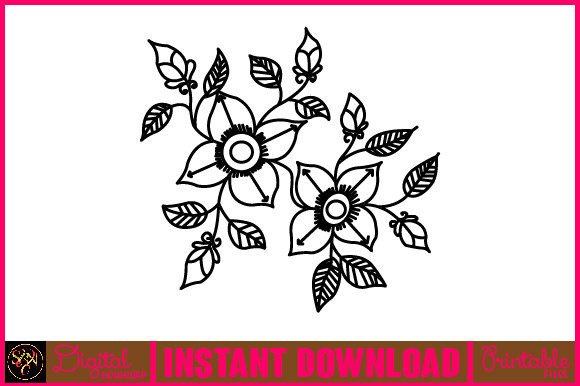
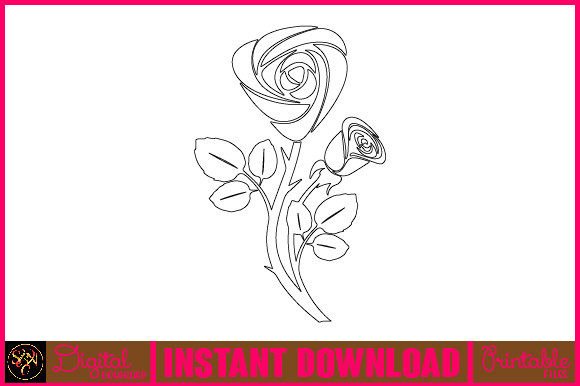
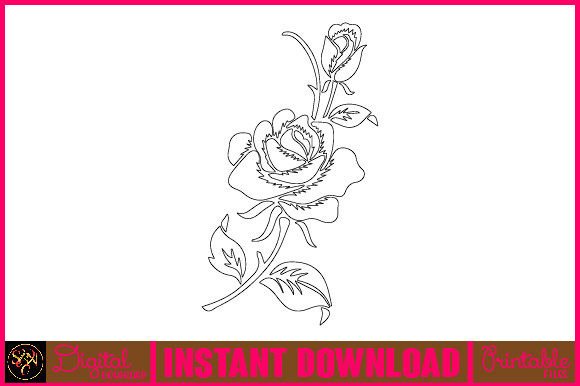
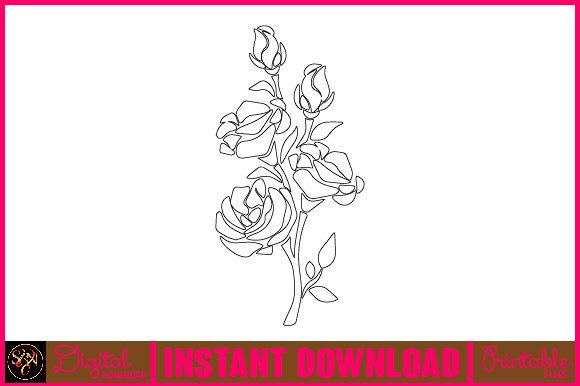
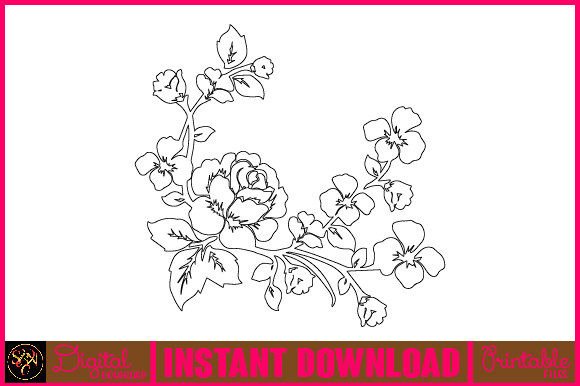
Opening Floral Line Art Flower SVG Elements 94, I immediately felt its quiet confidence. This isn’t a bold, saturated botanical explosion—it’s a hand-drawn whisper: slender branches, unfurling leaves, single-stemmed blossoms with subtle asymmetry, and open negative space that breathes. The line weight stays consistent but never rigid—there’s gentle variation, like ink on paper, not vector perfection. That’s key. As an embroidery designer who’s stitched hundreds of floral motifs, I know this kind of organic line translates beautifully to running stitch and satin stitch alike. It doesn’t demand heavy fill; it invites restraint. I pictured it instantly on a linen tea towel for a small-batch kitchen brand—not as a centerpiece, but as a quiet signature along the hem.
Where It Shines in Real Embroidery Projects
I tested Floral Line Art Flower SVG Elements 94 across three real-world scenarios: a custom embroidered cotton tote for a local florist’s pop-up, a set of baby onesies for a boutique Etsy shop, and a minimalist sweatshirt design for a slow-living apparel label. In each case, it performed with graceful adaptability.
- Tote bags: Stitched in soft matte cotton thread on natural canvas, the branch element curved elegantly along the side seam—no distortion, no crowding. Customers commented on how “light” and “airy” it felt compared to denser floral files.
- Baby items: On lightweight interlock knit, I used a light tear-away stabilizer and reduced density slightly. The fine lines stayed crisp, and the open composition avoided bulk—critical for delicate necklines and cuffs. Parents appreciated the understated elegance, not just “cute.”
- Sweatshirts: Paired with a simple monogram on the chest, the floral element worked as a subtle accent near the sleeve cuff. Its linear nature meant it didn’t compete visually or physically with thicker fabric texture.
It also holds up well in digital contexts—think printable mockups for Etsy listings or branded social posts. Because it’s built from clean, scalable vectors (as implied by the SVG format), resizing for thumbnails or product flat lays introduces no pixelation or jagged edges. That matters when your craft business relies on cohesive visual storytelling.
Where to Proceed With Thoughtful Care
That same delicacy means Floral Line Art Flower SVG Elements 94 asks for intention—not limitation. It’s not ideal for every surface or stitch method without adjustment.
- Small hoop sizes (under 4”): Some branch extensions or leaf tips may need slight cropping. Don’t force tiny details into tight spaces—simplify or reposition.
- Textured or stretchy fabrics: On terry cloth towels or ribbed knits, test stitch density first. Too much fill can obscure the line art’s charm; too little can make stems look fragile. A medium-weight cut-away stabilizer helps anchor the flow.
- Dark or dense backgrounds: While elegant on light fabric, avoid using light thread on black without testing contrast. Consider tone-on-tone stitching (e.g., charcoal grey on navy) for subtlety—or switch to a slightly bolder outline stitch if clarity is priority.
- Curved surfaces (caps, curved pillow covers): The branch motif flows naturally along gentle curves—but avoid placing intricate junctions (like where stem meets leaf cluster) directly over high-domes. Those areas risk slight stretching or misalignment.
What It Adds to Your Finished Product—Beyond Aesthetics
This isn’t just decoration. Floral Line Art Flower SVG Elements 94 quietly elevates perceived value. Its hand-drawn authenticity signals care—not mass production. When customers see that slight irregularity in petal shape or branch taper, they read “made thoughtfully,” not “downloaded and stitched.” That builds trust, especially for personalized gifts or wedding-related items (think monogrammed napkins or nursery wall hangings). For Etsy sellers, it supports brand consistency across product categories: same motif on a patch, a tea towel, and a digital embroidery file listing—unified but never repetitive. And because it avoids trend-driven clichés (no watercolor splashes, no glitter effects), it stays relevant season after season.
Practical Notes Every Embroidery Designer Should Check
Before stitching—or listing a finished product—do these six things:
- Test on scrap fabric matching your final substrate, with your intended stabilizer and thread colors.
- Review stitch density in your embroidery software—reduce fill where lines intersect to prevent buildup.
- Confirm hoop size compatibility; some elements extend beyond standard 5x7” boundaries.
- Inspect small details at actual stitch scale—tiny buds or leaf veins may need slight thickening for legibility.
- Check contrast in black-and-white mockups—this reveals clarity issues invisible on screen.
- Verify licensing terms before selling physical items or bundling digitally. Since this is listed under Freebies and Graphics, confirm whether commercial use is explicitly permitted for both handmade products and digital embroidery files.
Remember: even the most beautiful machine embroidery design is only as strong as your prep. Floral Line Art Flower SVG Elements 94 rewards attention—not automation.
Final Thought: A Quiet Tool With Real Presence
In a market flooded with maximalist, high-density floral embroidery files, Floral Line Art Flower SVG Elements 94 stands out by holding space instead of filling it. It’s not background noise—it’s a considered pause. Whether you’re designing a holiday embroidery gift, building a cohesive craft business line, or choosing a signature motif for your small shop product, this collection offers flexibility without compromise. It stitches cleanly, sells thoughtfully, and feels human—exactly what handmade product buyers are searching for.